How the Swinger Lifestyle Works: A Guide for Couples
The swinger lifestyle is a relationship arrangement in which consenting adults mutually agree to explore social or intimate experiences with other people while maintaining an established relationship. For some couples, it can be a way to explore shared interests, meet like-minded people, or introduce new experiences into their relationship. For others, it may simply be an idea they are curious about but never choose to pursue.
There is no single way to approach the swinger lifestyle. Every couple has different expectations, comfort levels, boundaries, and reasons for considering it. What matters most is that both partners are genuinely comfortable with the decision and communicate openly throughout the process.
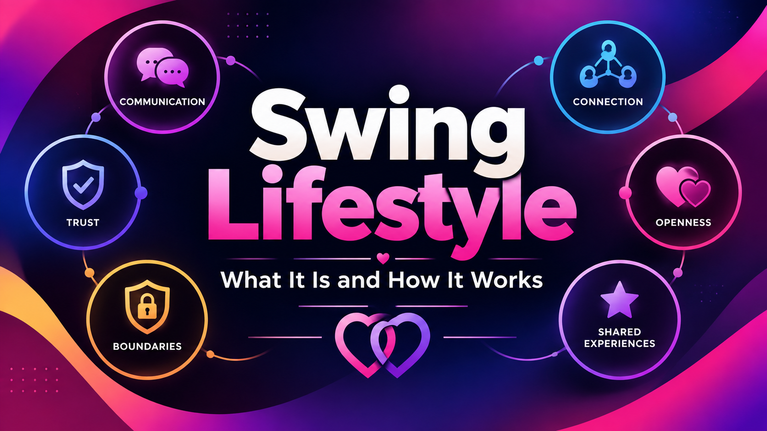
Understanding how the swinger lifestyle works begins with recognizing the importance of consent, trust, communication, boundaries, privacy, and emotional well-being.
What Is the Swinger Lifestyle?
The swinger lifestyle generally refers to couples or individuals in consensually non-monogamous relationships who agree to interact with other consenting adults outside their primary relationship. The exact form these interactions take varies significantly between couples.
Some couples may primarily participate in social communities and events, while others may choose to explore relationships or intimate experiences together. Some couples establish very specific rules about what they are comfortable with, while others prefer more flexibility.
The key difference between consensual exploration and infidelity is communication and agreement. In a healthy arrangement, partners understand what they have agreed to and have the freedom to establish or change their boundaries.
Why Do Couples Explore This Lifestyle?
Couples may have many different reasons for becoming interested in the lifestyle. Some are motivated by curiosity or a desire to explore something new together. Others enjoy meeting people with similar interests or becoming part of a social community.
For some couples, the experience is primarily about shared exploration rather than replacing their existing relationship. Others may simply want to understand whether this type of relationship structure suits them.
There is no universally correct motivation. However, couples should be cautious about using the lifestyle as a solution for serious relationship problems. New experiences generally cannot repair unresolved issues involving trust, communication, or commitment.
What the Swinger Lifestyle Is Not
The swinger lifestyle does not automatically mean that a relationship is unhealthy or that partners do not love one another. It also does not mean that every couple follows the same rules.
It should never be something one partner accepts because they are afraid of losing the other. Pressure, manipulation, guilt, or threats have no place in a healthy arrangement.
How Does the Swinger Lifestyle Work for Couples?
For couples who are considering this lifestyle, the process usually begins long before meeting anyone else. The first step is having an honest conversation.
Starting With an Honest Conversation
Partners should be able to discuss the idea without assuming that talking about it means they have already agreed to participate.
A useful conversation can include questions such as: What interests you about the idea? What makes you uncomfortable? What would you never want to happen? What would make you feel safe?
Both people should have enough time to think about their answers. It is perfectly acceptable for one partner to be curious while the other is uncertain.
Establishing Mutual Consent
Consent is one of the most important foundations of the swinger lifestyle. Both partners should genuinely agree rather than simply tolerate the idea.
Consent is also ongoing. Agreeing to something once does not mean agreeing to it forever. Either partner should be able to pause, change their mind, or stop without being punished or pressured.
Defining Personal Boundaries
Before exploring anything, couples should discuss boundaries. These can include social situations, communication with other people, privacy, and what each partner considers comfortable or uncomfortable.
Some couples may decide that experiences only happen together. Others may establish different arrangements. The important point is that boundaries should be discussed clearly rather than assumed.
Setting Rules and Expectations
Rules can give couples a framework for navigating unfamiliar situations.
Why Rules Matter
Clear expectations can reduce misunderstandings and help partners feel secure. Rules can also provide a way to address situations that may be emotionally difficult before they happen.
For example, partners might agree that either person can leave an event at any time, that private information will not be shared, or that both partners will discuss new situations before proceeding.
Examples of Couple-Specific Boundaries
Every couple’s boundaries are different. Some may establish rules about communication with new people, repeat interactions, social events, photographs, or online conversations.
It can also be useful to discuss emotional boundaries. Physical boundaries are only one part of the conversation. A couple should consider what types of emotional connections may feel comfortable or uncomfortable.
When Rules Need to Change
Boundaries are not necessarily permanent. An agreement that feels comfortable initially may need to change after a couple gains more experience.
Regular check-ins can help partners discuss what is working, what is not, and whether anything needs to be adjusted.
Communication Before, During, and After
Good communication should not stop once a couple has established boundaries.
Before an Experience
Before participating in an event or meeting, couples should discuss expectations and concerns. Both partners should know what the other is comfortable with and understand how they can communicate if something feels wrong.
During the Experience
Partners should continue respecting one another’s boundaries. If either person becomes uncomfortable, that concern deserves immediate attention.
Some couples use a simple signal or phrase to indicate that they want to pause or leave. Having an agreed way to communicate can be particularly useful in unfamiliar social situations.
Afterward
The conversation afterward can be just as important as the conversation beforehand.
Partners should discuss how they felt, what went well, and whether anything caused discomfort. The goal should be understanding rather than assigning blame.
Finding Like-Minded People
Couples who decide to explore the lifestyle may encounter communities through online platforms, social groups, or adult-oriented events.
Online Communities and Platforms
Online communities can make it easier to meet people who understand the lifestyle. Couples should create profiles honestly and avoid sharing unnecessary personal information.
Respectful communication matters from the first interaction. People should be cautious of anyone who pressures them to move faster than they want.
Social Events and In-Person Communities
Some couples begin by attending social gatherings simply to learn more about the community. This can allow them to become familiar with the environment without making immediate commitments.
Before attending an event, couples should understand its rules and expectations. Respecting venue policies and the boundaries of other attendees is essential.
Choosing People Carefully
Good interactions should involve mutual respect. Warning signs include pressure, aggressive behavior, dishonesty, or repeated attempts to ignore stated boundaries.
Couples do not owe participation to anyone simply because they have started a conversation.
Consent and Respect in the Swinger Lifestyle
Consent should remain central at every stage.
Consent Must Be Clear
Everyone involved should understand what they are agreeing to. Flirting, conversation, or previous participation does not automatically mean consent to something new.
No Means No
A refusal should be accepted without argument. Nobody needs to provide a lengthy explanation for declining an interaction.
Consent Can Change
Someone may initially agree and later decide they are uncomfortable. That decision should be respected immediately.
This applies equally to both partners in a couple and to everyone they meet.
Managing Jealousy and Insecurity
Even couples who feel confident about exploring the lifestyle may experience unexpected emotions.
Why Jealousy Can Happen
Seeing a partner interact with someone else can bring up feelings that were difficult to predict beforehand. Insecurity, comparison, fear of losing attention, or uncertainty about the relationship can contribute to these emotions.
Feeling jealous does not automatically mean that someone has failed or that the relationship cannot work.
How Couples Can Handle Difficult Feelings
The healthiest approach is usually honest communication without blame.
Partners can discuss what triggered the feeling and what reassurance they need. Sometimes the best solution is simply slowing down and giving both people time to process their emotions.
When Taking a Break Makes Sense
If an experience repeatedly causes distress or serious conflict, taking a break can be a responsible decision. The relationship should not be sacrificed simply to continue participating.
Privacy and Personal Safety
Privacy deserves serious consideration because the lifestyle involves personal relationships and sensitive information.
Protecting Personal Information
Couples should think carefully about what information they share online or with new acquaintances. Personal addresses, workplaces, financial information, and other identifying details should be protected.
Photographs should only be shared with appropriate consent, and couples should understand that anything sent digitally could potentially be saved or redistributed.
Meeting Someone for the First Time
Meeting new people in a public setting can provide an additional layer of safety. Couples may also want to maintain independent transportation or establish an easy way to leave if they become uncomfortable.
Most importantly, trust your instincts. If something feels wrong, leaving is always an option.
Digital Privacy
Strong passwords, privacy-conscious accounts, and careful handling of photographs and messages can help reduce unnecessary risks.
Couples should also discuss whether information about their participation can be shared with friends, family, or others.
Common Mistakes Couples Should Avoid
Several mistakes can create unnecessary problems for couples exploring the lifestyle.
One common mistake is allowing one partner to pressure the other. Another is failing to discuss boundaries before entering a new situation.
Couples may also underestimate jealousy or assume that both partners will react identically. Ignoring uncomfortable feelings can make them more difficult to address later.
Other problems include breaking agreements, sharing private information without permission, rushing into relationships with new people, or continuing despite clear signs that one partner wants to stop.
Respect should apply to everyone involved.
Signs a Couple May Be Ready to Explore
A couple may be better prepared when both partners independently express interest and can discuss difficult subjects openly.
Other positive signs include mutual trust, strong communication, respect for boundaries, and an understanding that either person can say no.
It is also helpful when neither partner expects the lifestyle to solve existing relationship problems.
Signs a Couple Should Slow Down or Wait
There are also situations where waiting may be the better choice.
A couple may want to pause if one partner feels pressured, significant trust problems remain unresolved, or communication is already difficult.
It may also be wise to wait if one person is participating mainly out of fear of losing their partner.
The decision does not have to be permanent. Couples can revisit the conversation later when both people feel more comfortable.
How to Take the First Step
The first step does not have to involve meeting anyone. It can simply be a conversation.
Start by discussing the idea honestly and listening to one another. Learn about consent, boundaries, privacy, and safer practices together.
If both partners remain interested, moving slowly can help. Some couples may prefer to begin with social interaction or community participation before considering anything more.
Regular check-ins can help ensure that both partners continue to feel respected and comfortable.
Final Thoughts
Understanding how the swinger lifestyle works is less about following a fixed set of rules and more about understanding the principles that make consensual exploration healthier and more respectful.
For couples who choose to explore it, mutual consent, honest communication, clear boundaries, privacy, personal safety, and health should remain priorities. Both partners should feel free to participate, pause, or stop at any time.
Most importantly, the relationship itself should remain important. Exploring something new should be a shared decision rather than a source of pressure. When couples communicate honestly and respect each other’s boundaries, they are better positioned to determine whether the swinger lifestyle is right for them.